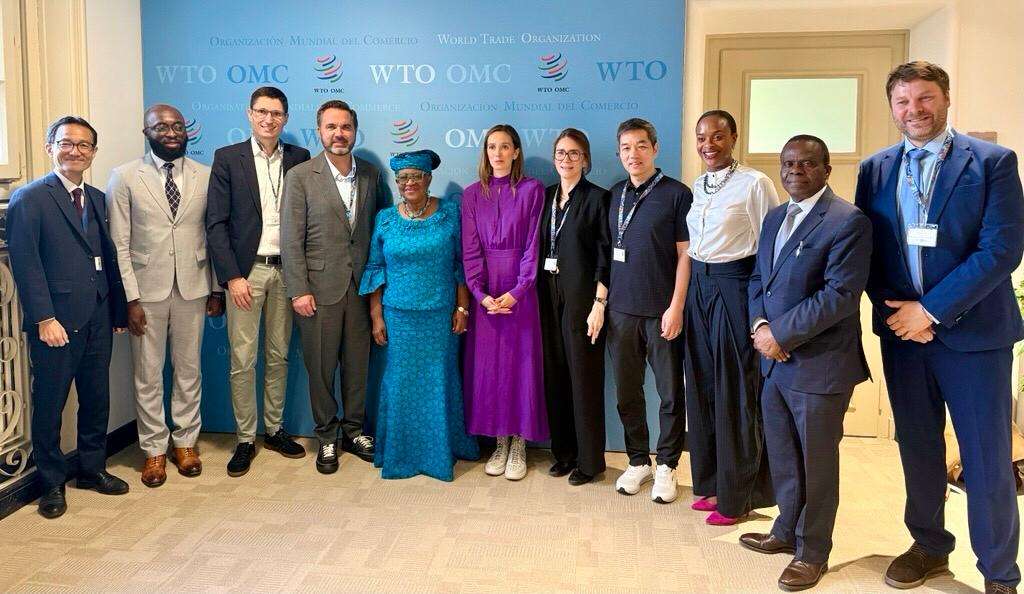
The Trade Committee brings together the world's leading sporting goods companies to promote open, fair and rules-based trade. By speaking with one voice on tariffs, market access and trade policy, WFSGI gives the industry a direct channel into the decisions that shape its ability to grow.


Trade
Committee
From supply chain resilience and regional manufacturing to international trade agreements and government engagement, the Committee helps members anticipate change, reduce risk and unlock growth opportunities around the world by:
Engaging directly with policymakers, governments and industry stakeholders, including through regular trade delegations to key sourcing countries, to support open markets, fair trade practices and efficient global supply chains.
Helping members understand and track evolving trade developments, exchange insights, and identify trends shaping manufacturing and sourcing networks.
Enabling members to join forces to participate in technical trade cases, supporting the set-up for legal frameworks and coordinating such trade cases.
The Committee's work spans trade measures and regulatory developments affecting members globally - recent priorities include:
No other global sporting goods industry platform brings together brands, manufacturers, suppliers and retailers to address trade challenges at this scale. Through WFSGI, members can help shape the policies that impact their businesses and their supply chains.

Marc Magnus
WFSGI COO and Head of TradeNeed more information?
Through collaboration and information sharing, members gain access to collective expertise and a stronger industry voice.
The Trade Committee helps ensure that the sporting goods industry remains a trusted partner for governments and policymakers while supporting business growth, investment and innovation across global value chains.
No other global sporting goods industry platform brings together brands, manufacturers, suppliers and retailers to address trade challenges at this scale. Through WFSGI, members can help shape the policies that impact their businesses and their supply chains.

Marc Magnus
WFSGI COO and Head of TradeCase Studies
Physical inactivity is one of the world’s most pressing public health challenges. At WFSGI, we believe our industry has a vital role to play. Through campaigns, innovations, and workplace initiatives, our members are increasing participation in physical activity across global communities. This platform shares the impact so far—and invites you to add your story.
Need more information?
Campaigns That Move
Campaigns have the power to shift norms and make movement more visible and accessible. The sporting goods industry has a unique role in shaping narratives around health and activity. The campaigns from members of our federation, featured here, use the power of storytelling, media, and brand reach to drive participation—especially among groups that may face social or cultural barriers to being active. By meeting people where they are and inspiring action, these initiatives help build a more inclusive movement culture.
Energising Communities
Physical activity opportunities are not distributed equally. From women and girls to young people and older adults, too many communities face structural barriers to movement. The sporting goods industry can help address these inequities. The initiatives featured in this section are grounded in local realities and focus on making activity more inclusive—through access, education, and community-led support.
Healthy Workplaces
The workplace is a powerful setting for supporting physical and mental well-being. These initiatives demonstrate how brands are embedding activity into daily routines—through flexible scheduling, on-site fitness options, mental health resources, and a culture that prioritises well-being. When companies support their employees’ health, the benefits ripple across communities.
Innovating for Impact
In a fast-moving world, innovation drives change. Brands are using digital tools, product design, and new ways of thinking to make movement easier, more enjoyable, and more inclusive. These examples show how the sporting goods industry is adapting to emerging trends and technologies to support more people in being active—wherever they are, and however they move.
Ingrid van Laerhoven
Director Government Affairs International Trade & Customs EMEA, Nike, Inc.

Manuel Pauser
Head of Global Government Affairs, adidas AG

Edwin Vermulst
WFSGI Trade Counsel

Marc-Ivar Magnus
WFSGI COO and Head of Trade
Jeff Tooze
Vice President, Global Customs & Trade, Columbia Sportswear

Download the 2025 Committees Reports
Pages 19–20